Building Winning Teams .... and Why I'm Still Learning
I recently sat down with Rasmus Nielsen and Chris Michalak from Caliber Inc for an episode of Bourbon O'Clock. We had a bourbon, talked business, and spent a lot of time discussing something I think about almost every day: How do you actually build a winning team?
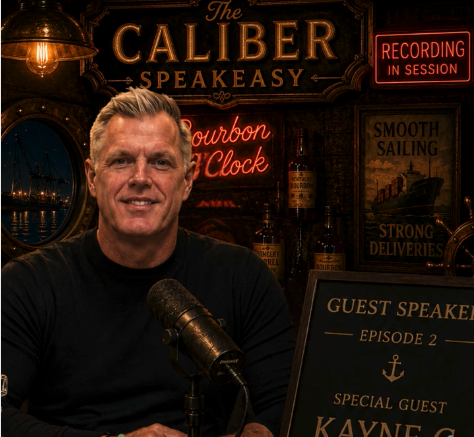
I recently had the opportunity to sit down with Rasmus Nielsen and Chris Michalak from Caliber Inc for an episode of Bourbon O'Clock. We had a bourbon, talked business, and spent a lot of time discussing something that I think about almost every day: How do you actually build a winning team?
Before I get into my recap and thoughts on the podcast, I want to thank Rasmus and Chris again for allowing me to be on their show. As I stated during the show, I am a customer of Caliber and have used their services to hire various individuals within United Transportation. Their firm operates very differently from the traditional recruiting firms. I can say this with confidence, having used dozens (maybe a hundred) different recruiting providers over the past 20 years. They are thoughtful with their approach, understand our sector and the associated pain points, and have an authentic playbook when it comes to putting candidates in front of the hiring manager. Additionally, they want to see the transportation sector evolve and thrive. This shows in their content on social media, special events throughout the year to bring others together, and being at relevant conferences, events, and outings to connect people together. I appreciate all of this as an owner and what they have built to date.
Specific to our time together on Bourbon O'Clock, I thought about our conversation afterward, and I realized that my answers today are probably very different from what it would have been five or ten years ago. I've spent much of my career building, leading, joining, leaving, and rebuilding teams. I've experienced great cultures and dysfunctional ones. Incredible visionaries and others who are happy working in toxicity. I've hired people who exceeded every expectation and others who looked perfect on paper but weren't the right fit. And as an owner and CEO today, I'm still learning. Maybe that's the first lesson -- there is no finish line when it comes to building a great team.
You don't hire ten great people, create an org chart, and declare victory. Businesses change. Customers change. People change. And the type of leadership you need at one stage of a company's growth may be completely different at the next. I've experienced this firsthand. Sometimes the structure you thought you needed a year ago isn't the structure you need today. As a leader, you have to be willing to recognize that and make changes, even when those decisions are difficult.
One thing I talked about with Rasmus and Chris is the importance of continually investing in people. That doesn't just mean compensation. It means teaching people, giving them new responsibilities, allowing them to make decisions, and exposing them to different parts of the business. It also means giving someone an opportunity before they're necessarily 100% ready. Some of the best people I've worked with weren't the people with the most impressive résumés. They were curious. They worked hard. They cared. They wanted responsibility. When you find THOSE people, invest in them.
Another major lesson I've learned is not to build a business around heroes. When companies are smaller, it's easy to become dependent on a handful of people who know everything. They solve every problem. Customers call them. Employees go to them. Every decision eventually finds its way to their desk. Those people can be incredibly valuable, but that dependency can also prevent a company from scaling. They will eventually be your single point of failure and stunt the long-term growth of the company. You want to "clone" these talents and have multiple subject matter experts (SME's) and reduce that risk of failure.
A winning team can't rely on one person knowing everything. You need processes. You need accountability. You need people who understand their roles and are empowered to make decisions. I've come to believe that the goal of leadership shouldn't be to become indispensable. Great leaders build organizations that can operate without them. I'm actively working on this within my own businesses today.
We also talk a lot about culture in business, but culture isn't the values printed on a wall or written on a website. Culture is how someone treats a customer when the CEO isn't watching. It's whether an employee helps a coworker when it isn't technically their responsibility. It's whether people take ownership when something goes wrong instead of trying to figure out whom to blame. That kind of culture takes time to build and seconds to damage. As leaders, we're responsible for protecting it.
Leadership also requires the willingness to look in the mirror. When someone isn't succeeding, it's easy to immediately conclude that you hired the wrong person. Sometimes that's true. However, there are plenty of times when we are in the thick of hiring, scaling our business, and "swimming upstream." Did we take time to provide them with clear expectations? Sometimes the organizational structure is wrong. Sometimes we haven't provided enough training. And sometimes we are the bottleneck. I've had to ask myself those questions many times. Being CEO doesn't mean having all the answers. In my experience, it means becoming better at asking the uncomfortable questions.
Technology will continue changing our industry. AI will change it even faster. Systems will become smarter, trucks and warehouses more connected, and information increasingly transparent. I'm excited about all of it. But I still believe the greatest competitive advantage a company can build is a group of people who genuinely care about one another, their customers, and the outcome. That's what creates winning teams.
My conversation with Rasmus and Chris reminded me that building those teams isn't a destination. It's something we have to work on every day. Hire good people. Invest in them. Give them responsibility. Hold them accountable. Let them grow.
And perhaps most importantly, never stop asking yourself:
"What can I do differently as a leader to make the people around me better?"
I'm still learning the answer and remain "under construction."
Written by
Kayne Grau
Entrepreneur. Writer. Thinker.